
Accepting New Clients
Mass Tort
Boston Scientific Accolade Pacemaker Recall Lawsuit
Boston Scientific Accolade pacemakers recalled after Safety Mode failures tied to 2,557 injuries and 4 deaths. Free, no-obligation case review.
A mass tort is civil litigation brought by large numbers of individuals who were harmed by the same product, drug, or corporate conduct — each with their own case and their own damages. If you were injured by a defective drug, dangerous medical device, toxic exposure, or other widespread harm, you may have a mass tort claim. Here's what you need to know.
A mass tort is a civil lawsuit brought by a large number of individuals against one or a few defendants where each plaintiff was harmed by the same product or conduct but suffered individual, varying injuries. Each plaintiff has their own case. Your damages are based on your specific harm — not averaged with others.
In a class action, all plaintiffs share a single recovery based on common harm. In a mass tort, you have your own individual case with damages tied to your specific injuries. Someone with catastrophic injuries recovers far more than someone with minor harm. Learn more about class actions →
Multidistrict litigation (MDL) consolidates thousands of mass tort cases from across the country before a single federal judge for coordinated pretrial proceedings. It does not merge the cases — each plaintiff's claim remains individual. MDL allows plaintiffs' lawyers to share experts and discovery costs while courts manage the docket efficiently.
Common mass torts involve defective prescription drugs, dangerous medical devices, toxic chemical or environmental exposure, contaminated water, and defective consumer products causing serious physical injury. The key: widespread, documented personal harm caused by a common product or conduct.
Mass tort litigation typically spans three to seven years — and some major MDLs have run for a decade or more. Timeline depends on the scientific complexity, number of plaintiffs, defendants' litigation strategy, and whether bellwether trial verdicts create settlement momentum. Patience is a real part of the process. Most cases ultimately resolve through negotiated settlement.
Going it alone against a large corporation is enormously expensive. Major defendants deploy armies of lawyers and spend hundreds of millions on defense. Consolidated mass tort proceedings allow plaintiffs' counsel to pool resources, share expert witnesses and scientific evidence, and develop litigation strategies individual plaintiffs could never afford. In virtually every mass tort, coordination delivers far greater leverage. Moreover, in many cases, courts require related cases to be consolidated, such that pursuing your case individually may not even be an option.
Pros: Shared costs, coordinated expert testimony, bellwether trials establishing case values, and enormous negotiating leverage. Cons: Your case moves at the pace of the broader litigation rather than on an individual timeline, and global settlement frameworks — while comprehensive — may not perfectly reflect every plaintiff's unique circumstances. Your attorney advocates for your individual allocation within that structure.
Defendants typically agree to a global settlement fund, and individual payments are calculated using a matrix — injury severity, duration of product use, age, and supporting medical documentation. Bellwether trial results heavily influence the negotiated values. Your attorney negotiates your individual allocation based on your specific profile.
Yes. Unlike a class action, you have your own attorney representing your individual interests throughout — gathering your medical records, documenting your damages, and negotiating your allocation. Your lawyer works in coordination with the broader plaintiffs' leadership but advocates for you specifically.
It's possible, but unlikely. Most mass tort plaintiffs never appear in court. The vast majority of cases resolve through negotiated settlements before trial. A small number are selected as bellwether trials, and their cases go to trial to help establish settlement values, but if your case is not chosen as a bellwether, you probably won't need to go to court. You may need to participate in a deposition, but full individual trials are uncommon in well-developed mass tort litigation.
Mass Tort
Boston Scientific Accolade pacemakers recalled after Safety Mode failures tied to 2,557 injuries and 4 deaths. Free, no-obligation case review.

Mass Tort
Families nationwide are pursuing claims against Microsoft and Mojang, alleging Minecraft was designed to addict young players.

Mass Tort
Families nationwide are suing Roblox, alleging design defects let predators groom and sexually exploit children on the platform.

Mass Tort
Thousands of young people are suing Meta, ByteDance, Snap, and Google, alleging their apps were deliberately designed to addict teens and cause serious mental health harm -- and a jury just agreed, awarding $6M to a young woman. Find out if you have a case.

Mass Tort
Teens harmed by Instagram, TikTok, Snapchat, Youtube, and Facebook may be entitled to compensation. A landmark jury just awarded $6M. Find out if you qualify.

Mass Tort
Aqueous film-forming foam (AFFF) used by the military and at airports contains PFAS "forever chemicals" linked to kidney cancer, testicular cancer, thyroid disease, and other serious conditions. If you are a firefighter, military veteran, or airport worker who developed cancer after exposure to AFFF firefighting foam, you may have a legal claim. Free case review.

Mass Tort
If your premature baby developed necrotizing enterocolitis (NEC), short-bowel syndrome, or other serious gastrointestinal injuries which required medical intervention after being fed Similac or Enfamil in the NICU, you may have a legal claim. MDL 3026. Verdicts up to $495 million. Free case review.

Mass Tort
If you had hernia surgery using Covidien mesh (Parietex, Symbotex, or ProGrip) and suffered complications, you may have a legal claim. MDL 3029 — No settlement yet. First trial set July 2026. Free case review.

Mass Tort
More than 67,000 women have sued Johnson & Johnson, alleging that talc-based baby powder caused ovarian cancer. Learn about MDL 2738, recent verdicts, and your legal rights. Free case review.

Mass Tort
Women who used chemical hair relaxers like Dark & Lovely and Just for Me and developed uterine or ovarian cancer may have a legal claim. MDL 3060. No settlement yet. Free case review.

Mass Tort
If you took Ozempic, Wegovy, Mounjaro, or another GLP-1 drug and developed gastroparesis (stomach paralysis) or lost vision, you may have a legal claim. MDL 3094 & MDL 3163. Free case review.

Mass Tort
Philips Respironics recalled millions of CPAP, BiPAP, and ventilator devices in 2021 due to degrading foam that released carcinogens into users' airways. A $1.1 billion personal injury settlement was reached in May 2024.
Mass Tort
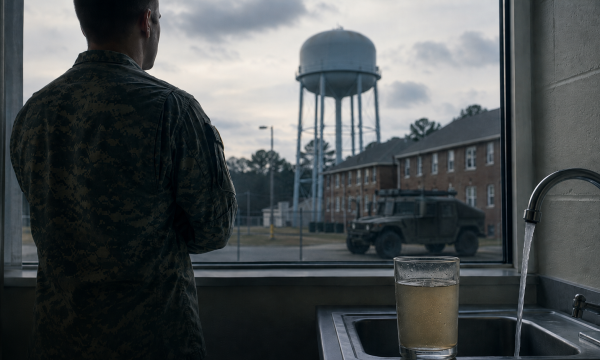
Millions were exposed to toxic chemicals in Camp Lejeune water supply from 1953–1987. Learn about the contamination, covered diseases, and the Camp Lejeune Justice Act.

Mass Tort
Roundup weedkiller's active ingredient glyphosate has been linked to non-Hodgkin's lymphoma. Learn about the $7.25B Bayer settlement in the Roundup cancer lawsuit and who may qualify for compensation.

Mass Tort
3M's defective Combat Arms Earplug (CAEv2) caused permanent hearing loss and tinnitus in 260,000+ military veterans. $6.01B settlement reached August 2023. We are not accepting new cases.

Class Action
Nexium, Prilosec, and Prevacid were linked to kidney disease. MDL 2789 resolved with over $533 million in settlements to settle approximately 11,000 PPI claims. Learn what happened and why we are no longer accepting cases.

Mass Tort
The federal transvaginal mesh MDL is 95% resolved, with $8B+ paid to injured women. Learn what happened, who settled, and what FDA did. We are not accepting new cases.